
MCL and PCL Tears in Football
Introduction:
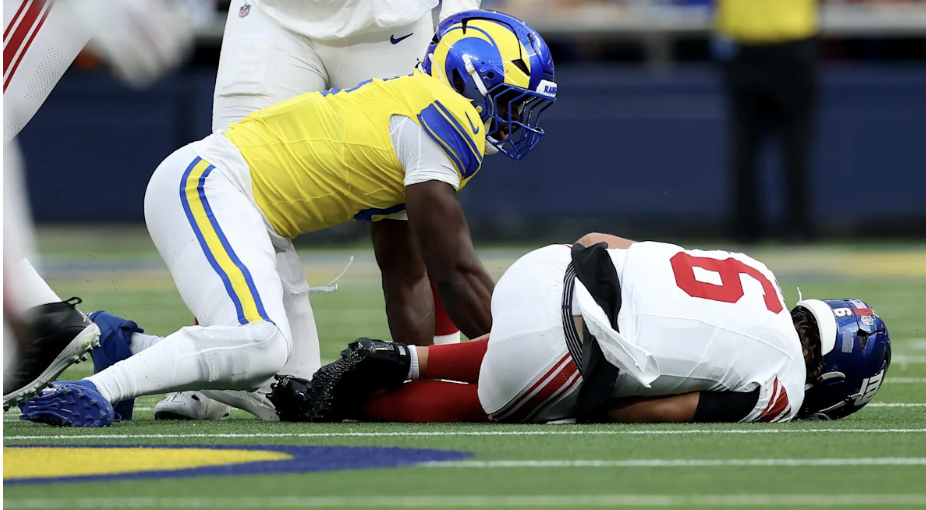
On September 21, New York Giants quarterback Jaxson Dart suffered a knee injury during a game against the Los Angeles Rams. Many fans feared he had torn his anterior cruciate ligament (ACL), but further evaluation revealed a torn meniscus and damage to his medial collateral ligament (MCL) and posterior cruciate ligament (PCL). Dart sustained the injury after colliding with multiple defenders while airborne, bringing his regular season to an end (Sullivan and McCarriston).
The MCL and PCL are two main ligaments within the knee essential for movement. While neither ligament receives as much attention as the ACL, an injury to either can sideline an athlete for weeks or months.
The Knee’s Four Ligaments:
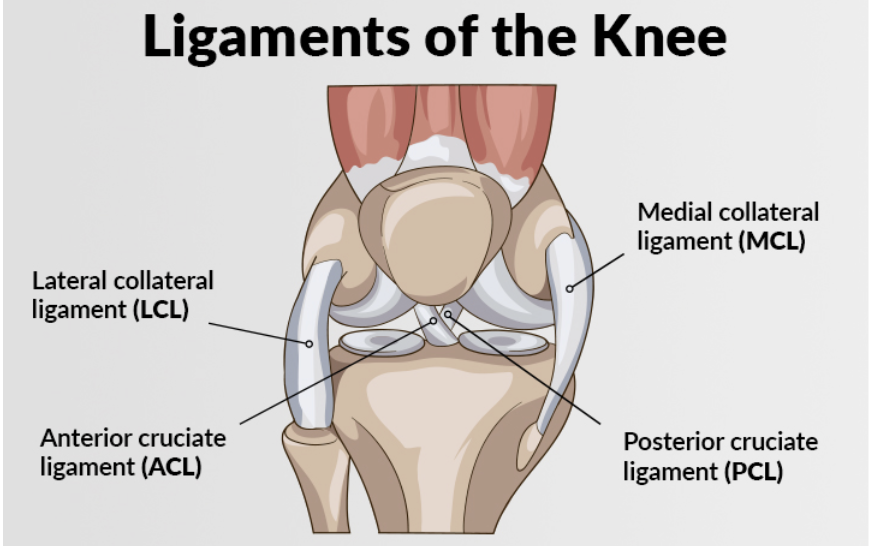
The knee relies on four main ligaments for stability. The ACL and PCL lie inside the joint, with the ACL positioned in front of the PCL. Together, they control the forward and backward movement of the shinbone relative to the thighbone. The MCL and lateral collateral ligament (LCL) run along the inner and outer sides of the knee, helping control sideways movement. These four ligaments hold together three bones that intersect at the knee: the femur, the tibia, and the patella. The knee’s ligaments help stabilize the joint as these bones move.
The MCL:
Injury
The MCL connects the femur to the tibia on the inner side of the knee, providing strength and stability. It is the most commonly injured knee ligament, with approximately 40% of knee injuries involving the MCL.
In football, players often tear their MCL when receiving a direct blow to the outer side of the knee. This force pushes the knee inward, stretching the ligament beyond its limits. Sharp pivots, sudden changes in direction, and repeated stress can also damage the MCL.
Treatment and Recovery
Treatment for an MCL tear often begins with resting the knee, applying ice and compression, and elevating it (RICE method). Most athletes wear a brace to help prevent unnecessary knee movement and crutches to reduce weight on the injured leg. Over time, physical therapy can help rebuild the thigh strength and the knee’s range of motion. Most MCL tears can heal without surgery because it lies outside the main knee joint and has a rich blood supply.
Recovery time depends on the injury’s severity. A Grade 1 injury (less than 10% of the ligament fibers are torn) involves minor damage and typically heals within one to three weeks. A Grade 2 injury (partial tear of the ligament’s outer layer) generally takes four to six weeks to heal. A Grade 3 tear (complete rupture of the ligament) may require six weeks or longer. Surgery or additional knee injuries may further extend recovery.
The PCL:
Injury
Like the MCL, the PCL connects the femur to the tibia. However, it lies inside the knee joint, behind the ACL, and prevents the shinbone from sliding too far backward. The PCL is stronger than the ACL and is therefore injured less often (Raj et al.).
A PCL tear requires considerable force. In football, this can happen when a player receives a direct blow to the front of the shin while the knee is flexed, causing severe hyperextension of the knee.
Treatment and Recovery
PCL injuries are graded according to their severity. A Grade 1 injury involves a partial tear, while a Grade 2 injury involves a complete tear of the ligament. A Grade 3 injury involves damage to other nearby ligaments.
An isolated PCL injury can often heal without surgery. Recovery also involves the RICE method (rest, ice, compress, and elevate) and a brace to prevent the shinbone from falling backward. Physical therapy for a PCL tear focuses on restoring movement and strengthening the quadriceps, the muscles at the front of the thigh.
While mild tears can heal within a few weeks, Grade 3 injuries involving multiple ligaments and instability often require surgery. Recovery varies with the extent of the damage, with full recovery post-surgery potentially taking 6 to 12 months.
Conclusion:
The MCL and PCL both play essential roles in keeping the knee stable during movement. MCL injuries are more common and often heal without surgery, aided by the ligament’s good blood supply. PCL injuries occur less frequently, but severe tears can require surgery and months of rehabilitation. When multiple knee structures are damaged, recovery becomes even more complicated. For athletes, these injuries highlight the importance of following a rehabilitation plan and allowing enough time to regain strength and stability before returning to the field.
Works Cited:
Alaia, Michael J. “Posterior Cruciate Ligament (PCL) Injuries.” OrthoInfo, American Academy of Orthopaedic Surgeons, www.orthoinfo.org/diseases--conditions/posterior-cruciate-ligament-injuries/. Accessed 28 Sep. 2026.
Bakshi, Neil K., et al. “Return to Play After Multiligament Knee Injuries in National Football League Athletes.” Sports Health, vol. 10, no. 6, 2018, pp. 495–99, https://doi.org/10.1177/1941738118768812.
“MCL Tear.” Cleveland Clinic, 18 Oct. 2021, my.clevelandclinic.org/health/diseases/21979-mcl-tear. Accessed 28 Sep. 2026.
“Posterior Cruciate Ligament (PCL) Injury.” Cleveland Clinic, 31 Jul. 2026, my.clevelandclinic.org/health/diseases/21793-pcl-posterior-cruciate-ligament-tears. Accessed 28 Sep. 2026.
Raj, Marc A., et al. “Posterior Cruciate Ligament Knee Injuries.” StatPearls, StatPearls Publishing, 8 Aug. 2023, www.ncbi.nlm.nih.gov/books/NBK430726/.
Sullivan, Tyler, and Shanna McCarriston. “Giants’ Jaxson Dart to Undergo Knee Surgery for a Full Meniscus Tear That Will End His 2026 Season.” CBS Sports, 25 Sep. 2026, www.cbssports.com/nfl/news/jaxson-dart-knee-surgery-end-giants-qbs-2026-season/.
https://media.zenfs.com/en/sb_nation_articles_115/7b3def8032bb6bba7cacbcb6a53ad8ee.jpg

