
Stress Fractures: Causes, Effects, and Prevention
Editor: Everret Chi
What is a stress fracture?
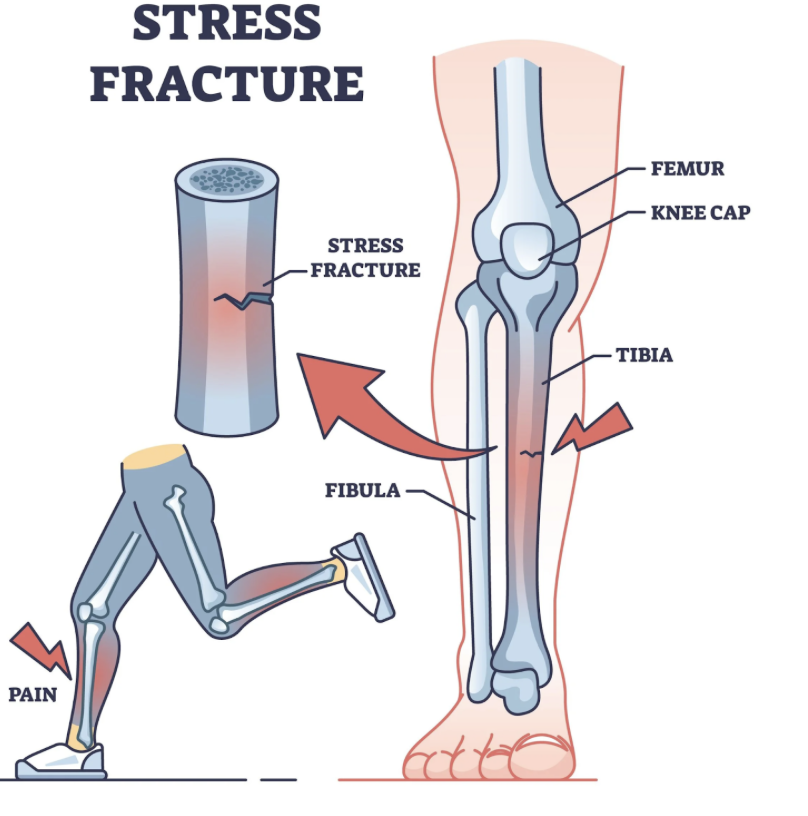
Stress fractures are a simple case of overuse injuries. They occur when repeated physical impact—such as running, jumping, or intense training—places more pressure on a bone than it can repair in time. This results in a small crack, which is often referred to as a hairline fracture. These injuries commonly occur in the bones of the feet and lower legs, frequently seen in sports such as basketball, soccer, track, and which involve repetitive and high-impact movements.
Types and Symptoms of Stress Fractures
These fractures often affect weight-bearing bones, including the tibia, fibula, heel, and bones of the foot. Although less common, they may also appear in the hips, spine, hands, or wrists. In fact, stress fractures are very prevalent in the sphere of sports medicine, accounting for approximately 20% of all sports-related injuries.
Common symptoms to look out for include:
Pain that worsens during physical activity
Pain that persists after even stopping activity
Pain that is more noticeable while resting
Tenderness to light touch around the affected bone
Swelling of the injured area
These symptoms related to stress fractures develop gradually, so it is important to emphasize early detection.
Specific Causes
Several athletic and physical factors contribute to stress fractures, including:
Training too frequently without adequate rest
Starting a new sport or activity without proper conditioning or equipment
Changing the surface you play on (such as grass to concrete)
Suddenly increasing activity intensity or duration
Wearing improper footwear
Specializing in one sport too early
Athletes who participate in sports like basketball, running, dance, or gymnastics are at a high risk of stress fractures. Certain medical conditions can also increase the likelihood of stress fractures, such as osteoporosis, high/flat arches in feet, bunions, vitamin D deficiency, obesity, and eating disorders, which weaken bone strength.
Long- and Short-Term Effects and Risks
Once a stress fracture is diagnosed, prompt treatment is crucial. Without proper care, a hairline fracture can quickly progress to a full break, requiring much more time to recover. In addition, if the fracture doesn’t heal in the expected amount of time, it is a “delayed union", which can lead to chronic pain and dysfunction in the future. Persistent stress of the fracture may also damage the surrounding soft tissues.
One major long-term effect that could arise from not treating these fractures is post-traumatic arthritis, which occurs when an untreated fracture alters the bone and joint surfaces. This increases the risk of future fractures and can severely limit athletic capability. Although hairline fractures may appear minor, this could not be further from the truth, as only immediate treatment can guarantee a quick recovery and prevent long-term consequences.
Prevention of Stress Fractures
As with most injuries, there are many helpful tips that you can use to help prevent any stress fractures. First is always to wear proper footwear. Improper footwear is one of the main causes of stress fractures in the feet, as the shoes need to be supportive to alleviate stress from the foot when performing strenuous, athletic activities.
Second is to modify your activity. If you plan to start a new athletic activity, begin with prior conditioning, giving time for the body to adapt to its new situation. Furthermore, you must recognize early signs of overuse, such as persistent soreness, fatigue, or joint pain, and rest when necessary. Overtraining is a common cause of stress injuries.
Lastly is balancing nutrition. Adequate intake of calcium, protein, and vitamin D is essential for proper bone growth. Excess weight gain can also increase stress on joints and bones, especially those in the lower half of the body. It is best to have meals with nutritional value, not only to improve athletic ability but also to prevent stress fractures.
Conclusion
Although stress fractures may appear like a minor injury, they should not be taken lightly, as immediate treatment is crucial to prevent more serious complications. By understanding the causes and recognizing early symptoms, using prevention strategies can protect athletes from facing long-term injuries. Prioritizing rest, proper equipment, and balanced training habits lets you maintain strong bones and stay free from injury throughout your career.
Work Cited
“Stress Fractures: Symptoms, Causes & Treatment.” Cleveland Clinic, 23 May 2023, https://my.clevelandclinic.org/health/diseases/15841-stress-fractures.
Bergman, Rachel. “Stress Reaction and Fractures.” StatPearls [Internet]., U.S. National Library of Medicine, 3 Apr. 2025, www.ncbi.nlm.nih.gov/sites/books/NBK507835/#:~:text=Delayed%20healing%20prolongs%20recovery%20and,of%20chronic%20pain%20and%20dysfunction.&text=Persistent%20stress%20on%20the%20affected,plantar%20fasciitis%2C%20or%20muscle%20strains.&text=Nonunion%20occurs%20when%20a%20stress,the%20navicular%20and%20anterior%20tibia.&text=Despite%20radiographic%20healing%2C%20persistent%20pain,restrictions%20and%20reduced%20athletic%20performance.&text=Inadequate%20rehabilitation%2C%20improper%20return%2Dto,impact%20sports%20are%20particularly%20susceptible.
“What Are the Risks of Leaving a Stress Fracture Untreated?” Austin Foot and Ankle Specialists, www.austinfootandankle.com/faqs/risks-untreated-stress-fractures.cfm#:~:text=More%20severe%20symptoms.,can%20become%20painful%20or%20impossible.
“Preventing Stress Fractures.” NYU Langone Health, https://nyulangone.org/conditions/stress-fractures/prevention.