
Laying Foundations: A Relationship with Food
Introduction
For those pursuing a career in competitive sports or a general active lifestyle, dieting becomes a preoccupation in terms of research and physical performance. Exercise and competition both elicit a unique and receptive relationship with food.
Many who have experimented with what they eat beforehand can likely attest that the thought of running a mile shortly after eating is unpleasant. With that, there has been an increased focus on dieting, both within and outside the athletic context, in the past century. This article will explore the connection between mental health and eating habits, a concept that is vital to both athletes and those who want to live a healthier lifestyle.
Eating Disorders and Mental Health:
Dieting in itself isn’t harmful, but extreme or unrealistic ideas of the dieting process can quickly transform dieting into a harmful process. The connection between body dysmorphia and excessive unmanaged stress has been explored in the past. In particular, eating disorders can threaten someone’s well-being by physically damaging the heart, mouth, and digestive system. Mental health is also in jeopardy as the individual is in a cyclical state with their behaviors that both provoke anxiety and depressive symptoms.
The literature defines three main disorders:
Binge Eating Disorder
Anorexia nervosa
Bulimia nervosa
Binge Eating Disorder: Binge eating is a common eating disorder characterized by an individual eating large amounts of food in a short period of time. Often, individuals suffering from this disorder exhibit a lack of control. There are no compensatory or purging behaviors associated with the condition.
Anorexia nervosa:
Anorexia nervosa (anorexia) is an eating disorder characterized by the immense fear of gaining weight. Being severely underweight is often an immediate and direct consequence of suffering from anorexia. Those who suffer from anorexia can experience both obsessive eating restrictions (fasting) or self-induced vomiting post-binge eating.
Bulimia nervosa:
While similar to anorexia nervosa, bulimia nervosa is a separate condition entirely. Bulimia nervosa still retains the same immense fear of gaining weight that characterizes anorexia nervosa. However, those who suffer from bulimia nervosa tend to consume large amounts of food in a short period of time. This is typically followed by an immediate purging act (self-induced vomiting). The repeated act of overeating in combination with purging can result in the maintenance of a healthy weight range, even if the methods to get to such a weight aren’t necessarily healthy at all.
Building a Better Relationship with Food:
Stress is by no means unnatural; it is a mental and bodily response to challenges that may be present in the external environment. How stress is confronted and internalized is a lifelong responsibility. However, that does not necessarily mean that every waking moment should be in agonizing tension, especially when we sit down to eat.
There are many causes and levels of severity for the above eating disorders, and so recommendations and practices are not at all a size one fits all. The points of interest listed below are starting points for developing a healthier and more sustainable relationship with eating.
Mindful eating practices: There are a range of mindfulness approaches and rituals to eating, but the aim is to slow down the consumption of food, to become more aware of what is being eaten, and to cut food into digestible portions. The mind, as a result, enters a relaxed state that promotes digestion in the gut and allows the brain to register satiety.
Cutting back on highly palatable and processed foods: A growing body of literature has shown, namely through animal models, that highly palatable foods –i.e., with high levels of sugar and fat– hijack the reward pathway, causing neuroadaptations that disrupt the receiving, relying, and communication between the gut and brain. This manifests into an increased anticipation of consumption and a lack of satiety after the meal.
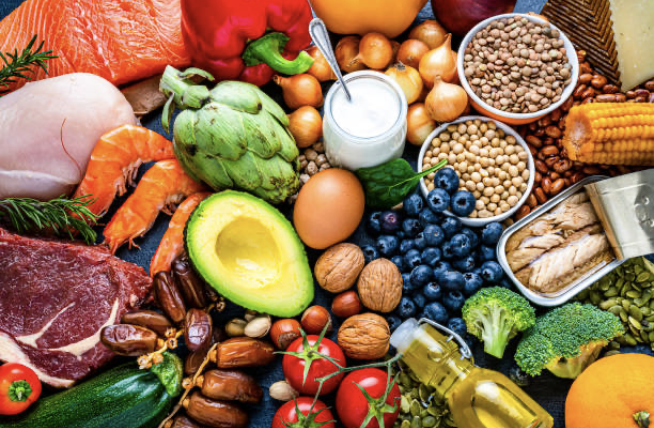
Emphasizing nutrient-dense foods and whole foods: This diet is a strong foundation in cultivating a healthy relationship with food. Increased nutrients, such as fiber, promote the feeling of being full for longer periods of time. Additionally, since many whole foods are nutrient-rich, it eliminates the possibility of nutritional deficiencies that could contribute to injury and cognitive impairment.
References
American Psychiatric Association . (2025). How Stress Affects Eating Habits: Not One-Size-Fits-All. Retrieved from Psychiatry.org website: https://www.psychiatry.org/News-room/APA-Blogs/How-Stress-Affects-Eating-Habits
Balasundaram, P., & Santhanam, P. (2026). Redirecting. Retrieved January 28, 2026, from Google.com website: https://www.google.com/url?q=https://www.ncbi.nlm.nih.gov/books/NBK567717/&sa=D&source=docs&ust=1769571131785279&usg=AOvVaw0-hs6i2O-4L9GKdYA6npDG
Cherpak, C. E. (2019). Mindful eating: A review of how the stress-digestion-mindfulness triad may modulate and improve gastrointestinal and digestive function. Integrative Medicine: A Clinician’s Journal, 18(4), 48–53. Retrieved from https://pmc.ncbi.nlm.nih.gov/articles/PMC7219460/
de Macedo, I. C., de Freitas, J. S., & da Silva Torres, I. L. (2016). The Influence of Palatable Diets in Reward System Activation: A Mini Review. Advances in Pharmacological Sciences, 2016, 1–7. https://doi.org/10.1155/2016/7238679
Harvard Medical School. (2024, April 3). Foods linked to better brainpower. Retrieved from Harvard Health website: https://www.health.harvard.edu/healthbeat/foods-linked-to-better-brainpower
Hough, K., Friuli, M., Avena, N. M., & Romano, A. (2026). The Addicted Brain: How Processed Foods Hijack Reward Pathways. Pharmacological Research, 108097. https://doi.org/10.1016/j.phrs.2026.108097
Manore, M. (2017, January). Weight Management for Athletes and Active Individuals. Retrieved from Gatorade Sports Science Institute website: https://www.gssiweb.org/sports-science-exchange/article/weight-management-for-athletes-and-active-individuals
Mayo Clinic. (2023, March 28). Eating Disorders. Retrieved from Mayo Clinic website: https://www.mayoclinic.org/diseases-conditions/eating-disorders/symptoms-causes/syc-20353603
Paz-Graniel, I., Babio, N., Mendez, I., & Salas-Salvadó, J. (2019). Association between Eating Speed and Classical Cardiovascular Risk Factors: A Cross-Sectional Study. Nutrients, 11(1), 83. https://doi.org/10.3390/nu11010083