
The Athlete’s Guide to Carbs
Carbs often get a bad reputation in the fitness world and popular diet culture, but they are one of the most important nutrients for athletic performance. The challenge, however, is learning to use them effectively, not just deciding how much to intake. This is often a distinction that separates how consistently an athlete trains and performs.

Why Do Carbs Matter So Much?
When you eat carbohydrates, the body breaks them down into glucose, which the body then stores as glycogen in your liver and muscles. When exercising, glycogen provides fuel, especially for high-intensity activity. When glycogen stores run low, athletes may experience things such as sudden tiredness, foggy thinking, and a decline in power. Fat can also fuel lower-intensity exercise; however, carbohydrates are far better suited to the rapid energy demands of intense workouts. Eating adequate amounts of carbs can also help spare protein for muscle maintenance and repair.
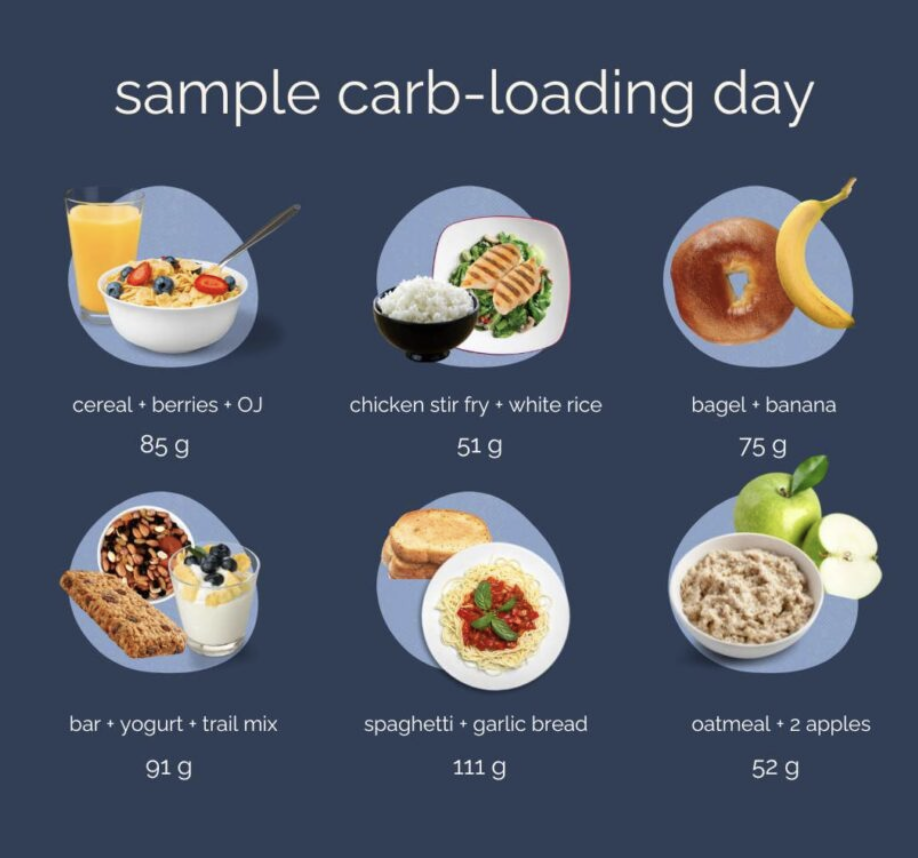
Choosing Carbs for Different Purposes
Calling carbs “good” or “bad” oversimplifies things. It is more useful ot think about how different foods fit into an athlete’s daily diet and training schedule.
For everyday meals, it is advised to choose nutrient-desnse carbohydrate sources such as oats, brown rice, quinoa, sweet potatoes, beans, fruit, and whole-grain bread. These are generally considered slow-digesting carbs, suited toward providing slower more gradual energy. They additionally offer fiber, vitamins, and minerals that support overall health, making them suitable for being the majority of daily carb intake.
Faster-digesting options, such as white rice, bananas, sports drinks, white bread, gels, and dried fruit, prove their usefulness around training. They provide readily available energy and may be easier to eat before or even during exercise.
Sugary snacks and other highly processed foods can also provide quick energy, but they offer far fwer nutrients. This does not mean they must be off-limits; however, for everyday fueling it is generally more effective to choose foods that provide more nutritional value.
How Do I Time My Carbs?
Carbohydrate needs vary with body size and training load. As a general guideline, athletes require about 3-5 grams of carbs per kilogram of body weight per day, with needs rising toward 8-10 grams per kilogram during periods of intense training.
Before training One to four hours before exercise, eat a carbohydrate-rich meal that is easy for digestion. If you are eating close to your workout, it may provide benefit to keep fat and fiber relatively low. Ideal options for these include oatmeal with a banana, rice with lean protein, or toast with honey.
During exercise For longer wkrouts, aim for about 30-60 grams of fast-digesting carbs per hour to hep maintain energy and delay fatigue. Sports drinks, gels, and dried fruits offer convenient choices. Even longer endurance sessions may require up ot 90 grams per hour.
After training Carbs help replenish glycogen stores, while protein supports muscle recovery. This allows for more flexible intake. Choices like chocolate milk, rice with chicken, or fruit and yogurt smoothie work well. Eating soon after a workout can prove especially useful when another training session is scheduled later in the day.
Key Takeaways
Center your carb intake around slow-digesting, fiber-rich carbs for sustained energy.
Limit fast-digesting carbs to closer to or during exercise or training.
Eat enough carbs to support your activity level and replenish your energy stores.
Do not be afraid of carbs: they are an important fuel source for athletic performance.
Carbs do not deserve their harsh reputation in the fitness world. For athletes, the goal is to learn how to use them for effective training and recovery.
Works Cited
Adler, Eloise. “What are carbs? A simple guide to a complex nutrient.” FoodUnfolded, https://www.foodunfolded.com/article/what-are-carbs-a-simple-guide-to-a-complex-nutrient. Accessed 10 September 2026.
Rapaport, Lisa, and Tara Collingwood. “What Is Carb Timing, and Can It Improve Workout Performance?” Everyday Health, https://www.everydayhealth.com/fitness/what-is-carb-timing-and-can-it-boost-your-workout-performance/. Accessed 10 September 2026.
“What's the difference between good and bad carbs?” UCLA Health, https://www.uclahealth.org/news/article/explaining-difference-between-good-and-bad-carbs. Accessed 10 September 2026.
User, Guest. “The Strength Trainee’s Guide to Carbohydrate Timing.” Progressive Rehab & Strength, Progressive Rehab & Strength, 16 Mar. 2026, www.progressiverehabandstrength.com/articles/2018/12/2/the-strength-trainees-guide-to-carb-timing.