
Pass the Beets, Skip the Mouthwash: Why Nitrate Timing Might Be the Weirdest Edge in Sports Nutrition
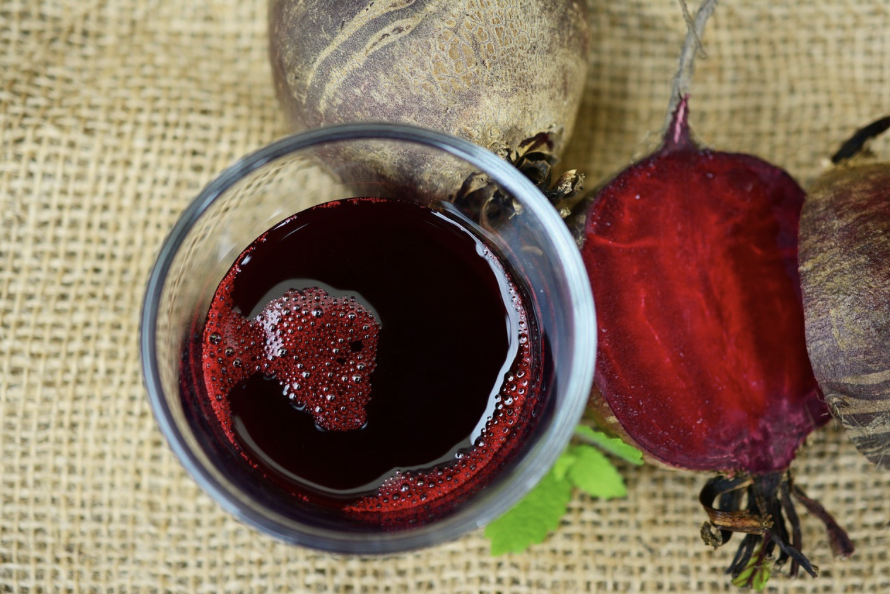
I had my first experience with teammates handing me shots of beetroot juice before racing. Honestly, I thought it was some kind of joke. Beet root juice just tastes like dirt from a garden. However, beet juice is one of the only "naturally occurring" performance enhancing supplements which has real evidence to back it.
Beets are loaded with dietary nitrate. Once it's in your body, nitrate gets converted into nitric oxide, a molecule that helps blood vessels relax and helps muscles use oxygen more efficiently. Simply put, your muscles can do the same amount of work while burning less oxygen. The International Olympic Committee's 2018 consensus statement on supplements lists nitrate alongside caffeine, creatine, and buffering agents as one of only a handful of supplements with good evidence of a performance benefit (Maughan et al., 2018). That's a pretty exclusive club for root vegetables.
The catch is that nitrate doesn't work instantly; it doesn't work equally for everyone, and a simple mouthwash can shut the entire process down.
Why This Matters for Athletes
A lot of events, like the 1,500m, a 2K erg test, a hard 5K, or a long shift in soccer or hockey, are basically a battle over how efficiently your body can deliver and use oxygen. Anything that lowers the oxygen "cost" of running, rowing, or cycling at a given pace gives you more room before you hit the wall.
A 2020 meta-analysis pooling dozens of studies found that nitrate supplementation improved exercise performance compared to a placebo (Senefeld et al., 2020). That being said, the average effect was small. However, for many athletes, a small but real edge is exactly what they're looking for.
Individuals who seem to benefit most:
Recreational and sub-elite athletes tend to see bigger improvements than highly trained elites, whose bodies may already be very efficient at producing nitric oxide
Efforts lasting roughly two to ten minutes, or longer endurance and intermittent team-sport efforts, seem to respond better than all-out sprints
Very short, explosive efforts (such as a single sprint or a max jump) show much less consistent results (Wong et al., 2021)
The Science Behind It
Surprisingly, your body can't convert nitrate into nitric oxide on its own efficiently, so it outsources the job to the bacteria residing on your tongue.
The way to do this is by drinking beet juice, which causes the nitrates to get absorbed through your digestive system. Then a huge amount of those nitrates are excreted back into your saliva. The bacteria in your mouth convert that nitrate into nitrite. Nitrite is swallowed, and when it reaches your stomach and bloodstream, it is converted into nitric oxide. This process has been named the nitrate-nitrite-nitric oxide pathway.
Because this recycling process takes time, blood nitrite levels don't peak right away. Most studies that show a benefit have athletes take their dose about two to three hours before exercise, and doses in the range of roughly 6-13 mmol of nitrate are the most commonly studied (Nowak et al., 2025). Some research also uses a "loading" approach, where athletes take nitrate daily for several days leading up to an event, which may help build up a more reliable effect.
Studies suggest that when you use an antibacterial mouthwash, it kills a lot of these beneficial bacteria, which would otherwise convert nitrates into nitrites. A recent study demonstrated that after just three days of antibacterial mouthwash, there was a decrease in the rate of nitrate to nitrite conversion in the oral cavity; in addition, the authors noted a small increase in systolic blood pressure. Therefore, if you are planning on consuming beetroot juice on race morning followed by an antibacterial rinse, you could potentially nullify the effects of what you paid for.
Common Nitrate Mistakes Athletes Make
A common, yet critical mistake is bad timing. People slam a beet shot five minutes before warm-ups the same way they'd take a gel, but nitrate needs a couple of hours to do its thing. By the time it's actually working, the race is already over.
The second mistake is rinsing with mouthwash. Brushing your teeth is fine, but strong antibacterial rinses (especially the prescription-strength ones) are the main concern. Most athletes have no idea this interaction even exists.
Third, many athletes expect nitrate to help with everything. If your sport is mostly short, explosive bursts, the evidence is honestly a lot weaker, and you'd probably get more out of focusing on sleep, total carbohydrate intake, and training quality.
Fourth, not every "beet" product actually contains much nitrate. The amount of nitrate found in beetroot juice varies greatly depending on how it's grown and processed, and some powders and gummies marketed for "circulation" contain very little. Concentrated shots made specifically for athletes usually list their nitrate content on the label, which is what you actually want to check.
Finally, some people panic the first time they try it, due to urine discoloration. Urine color after beat juice consumption can sometimes be pink or red. This effect is harmless and has a name (beeturia), but can definitely cause minor panic in some.

What Athletes Can Do
Athletes could make use of nitrates through a few small, intentional changes in their behavior. A nitrite level peak has been shown to occur around 2-3 hours after ingesting a concentrated shot of beet root juice before exercise or competition. Some athletes will "load" by taking a daily dose of beet root juice over several days before an event. Additionally, incorporating more nitrate-rich foods into your everyday diet (spinach, arugula, celery, beets) provides a low-risk means of supporting this same pathway every day.
You should avoid using antibacterial mouthwashes on those days you rely upon nitrate; also, do not rinse your mouth frequently immediately thereafter (it would be beneficial to swallow that nitrite-rich saliva, despite how unhygienic this sounds). The most important aspect of trying nitrates is testing them in practice. While many individuals have found no issues with drinking beet root juice prior to exercise/competition, there are certainly individuals who experience gastrointestinal upset from drinking large quantities of beet root juice. Race day is likely not the time to discover this.
One significant safety note: Be sure to utilize only food based sources such as beet juice and vegetables. Nitrate/nitrite isolates sold online are not equivalent to food based nitrates/nitrites and therefore can pose serious health risks if taken in excessive doses.
Key Takeaways
Beetroot juice isn't magic, but it's one of the rare supplements where the hype is at least partly backed by real evidence. The benefit is small; it depends heavily on timing and it works best for endurance and middle-distance efforts rather than pure sprints. Something useful to take away from this is that performance nutrition isn't just about what you take, it's about understanding how your body actually processes it. When an athlete knows why the timing matters, they stop wasting good fuel and start to use it for the better.
Works Cited
Bondonno, Catherine P. “Antibacterial mouthwash blunts oral nitrate reduction and increases blood pressure in treated hypertensive men and women.” American Journal of Hypertension, Oxford University Press, 2015, https://academic.oup.com/ajh/article-abstract/28/5/572/174874. Accessed 28 September 2026.
Burns, Stephen F. “The Effect of Beetroot Ingestion on High-Intensity Interval Training: A Systematic Review and Meta-Analysis.” PMC, 2021, https://pmc.ncbi.nlm.nih.gov/articles/PMC8618171/. Accessed 28 September 2026.
Maughan, Ronald John. “IOC consensus statement: dietary supplements and the high-performance athlete.” British Journal of Sports Medicine, 2018, https://bjsm.bmj.com/content/52/7/439. Accessed 28 September 2026.
Nowak, Agnieszka. “Beetroot Juice Supplementation as a Healthy Aging Strategy Through Improving Physical Performance and Cognitive Functions: A Systematic Review.” PMC, National Library of Medicine, 2025, https://pmc.ncbi.nlm.nih.gov/articles/PMC12735994/. Accessed 28 September 2026.
Senefeld, Jonathon W., and Chad C. Wiggins. “Ergogenic Effect of Nitrate Supplementation: A Systematic Review and Meta-analysis.” PMC, https://pmc.ncbi.nlm.nih.gov/articles/PMC7494956/. Accessed 28 September 2026.